














Resources and Information
Service Dogs for PTSD and Other Conditions
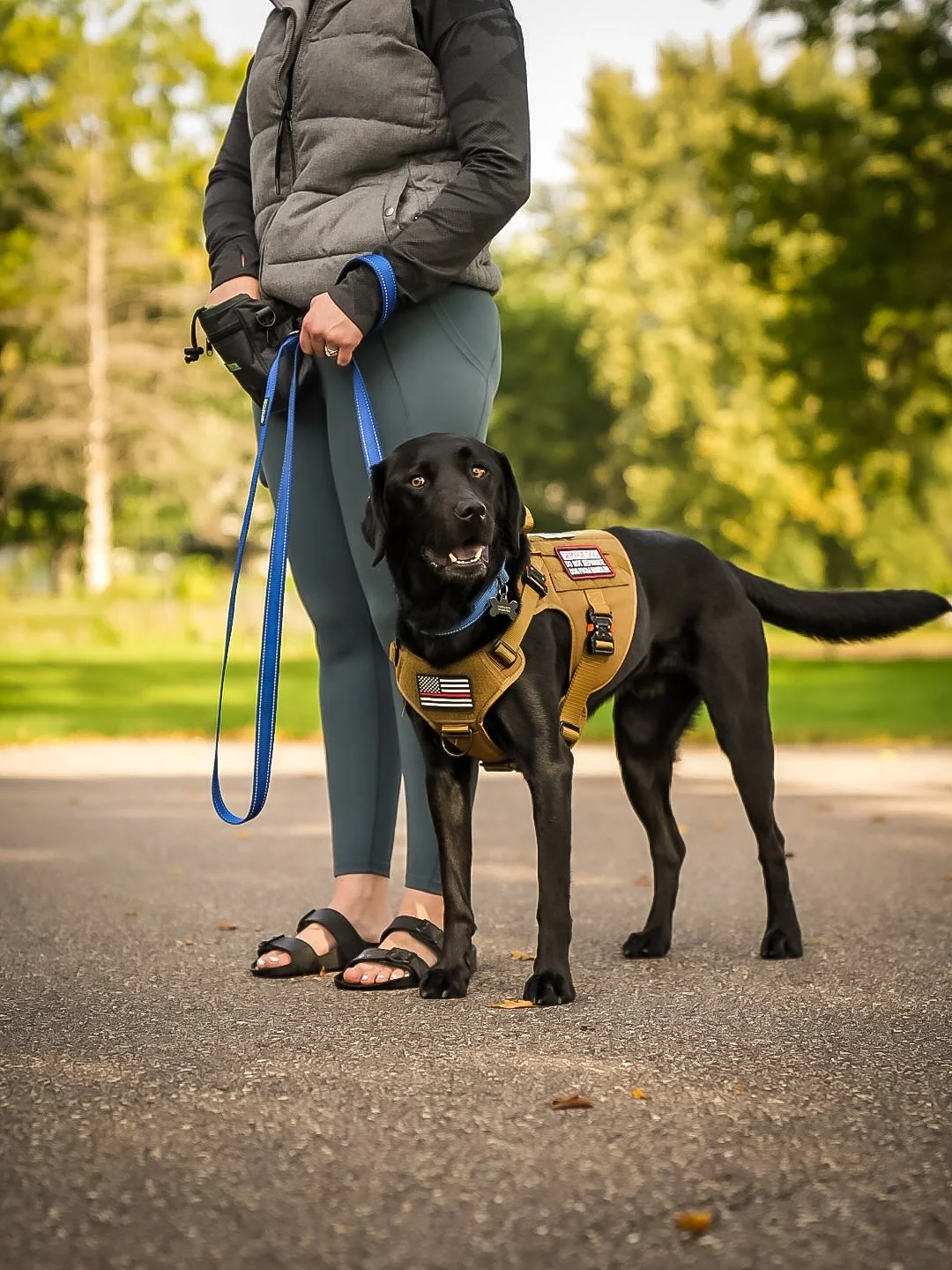
Service dogs play a critical role in supporting individuals with disabilities, including post-traumatic stress disorder (PTSD), traumatic brain injury (TBI), and other physical or mental health conditions. Trained service dogs help their handlers live more independent, stable, and fulfilling lives by performing specific tasks related to their disability.
While many animals can provide comfort, only service dogs are individually trained to perform task-based work and are protected by federal law.
Understanding Assistance Animals
There is often confusion between service dogs, therapy animals, and emotional support animals. While each serves an important purpose, they differ in training, role, and legal access.
Service Dogs
Individually trained to perform specific tasks for one handler
Protected under the Americans with Disabilities Act (ADA)
Allowed in public spaces where the public is permitted
Therapy Animals
Provide comfort to multiple people in settings such as hospitals, courts, or schools
Not considered service animals under the ADA
Do not have public access rights
Emotional Support Animals (ESAs)
Provide emotional support through companionship
Not task-trained
Not protected under the ADA for public access
Public Access & Legal Protections
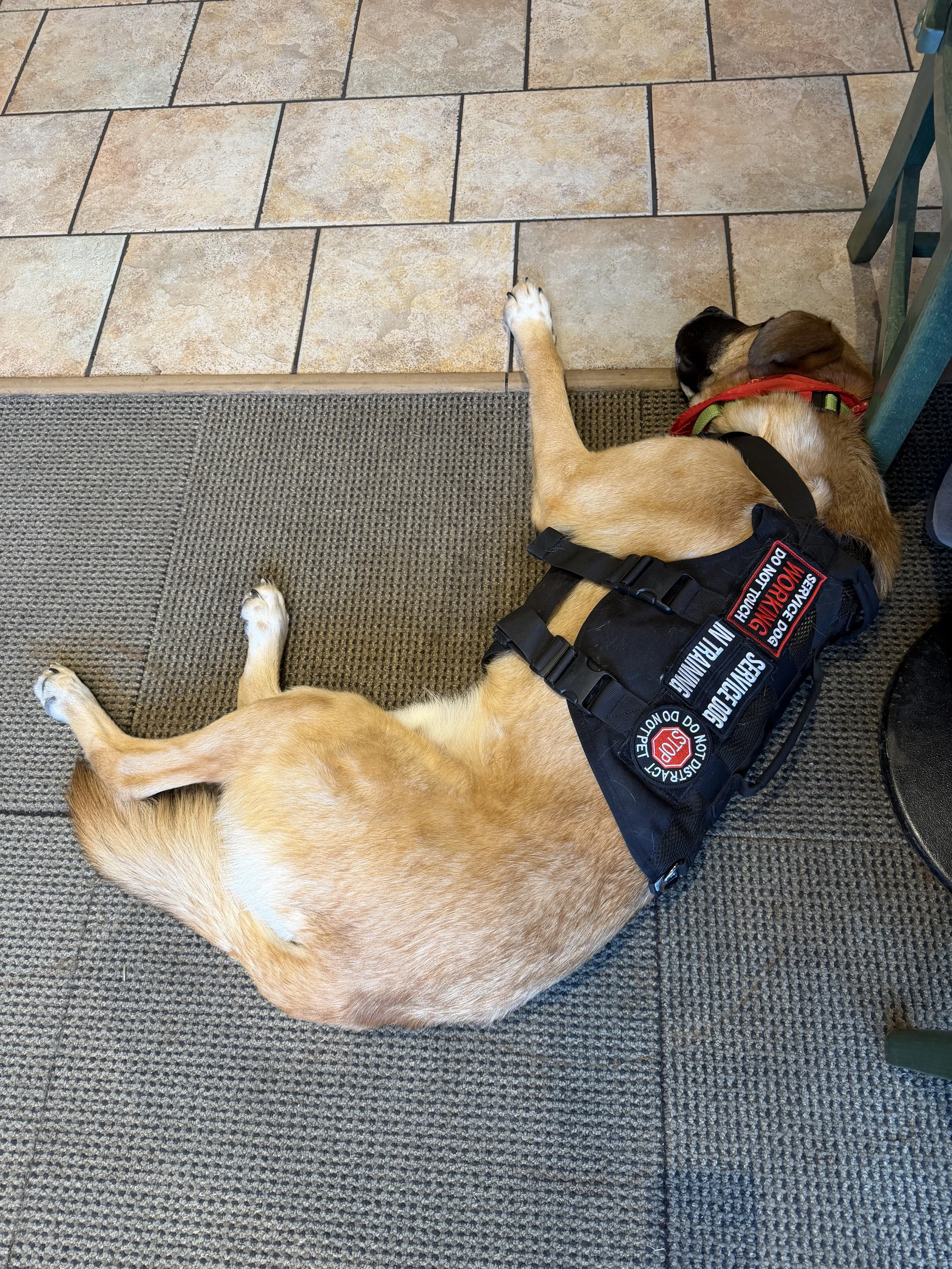
Under the ADA, service dogs are not required to wear special vests or carry identification and cannot be denied access to public places. Businesses may only ask:
Whether the dog is required because of a disability
What task the dog has been trained to perform
There is no national registry for service dogs. Online registrations, ID cards, or vests do not grant legal access.
Types of Service Dogs
Service dogs may assist with:
Visual or hearing impairments
Mobility limitations
Seizure response
Diabetes detection
Psychiatric and mental health conditions, including PTSD and anxiety disorders
Each service dog completes extensive training before being paired with a handler.
Service Dogs and Veterans
In some cases, the Department of Veterans Affairs (VA) may provide support for service dogs prescribed as part of a treatment plan. Coverage may include veterinary care and certain equipment but does not cover the cost of the dog or routine care. Eligibility is determined through a VA healthcare provider.
Learn More
For a more detailed explanation of service animal laws, public access rights, and VA guidance, please review our full resource guide.
PTSD Information and Resources
Traumatic Brain Injury Information and Resources
Military Sexual Trauma Information and Resources